
Great news for WordPress users and hosting providers alike: WordPress 7.0 is officially scheduled for release on May 20, 2026. That is just two days away from today, and the WordPress development team has been working tirelessly to deliver what promises to be one of the most polished and performant releases in recent memory.
If you run a WordPress website on a shared hosting, VPS, or cloud hosting plan, this release brings several important changes that you should be aware of. Here is everything you need to know about WordPress 7.0 and how it affects your hosting experience.
What Is WordPress 7.0?
WordPress 7.0 is the next major version of the world’s most popular content management system, powering over 43 percent of all websites on the internet. Major WordPress releases typically arrive every three to four months and include a combination of new features, performance enhancements, security improvements, and bug fixes.
Following the December 2025 release of WordPress 6.9 “Gene” — which introduced block-level collaboration notes, an expanded Command Palette, and the new Abilities API — WordPress 7.0 builds on that foundation with further refinements and architectural improvements.
The development process for WordPress 7.0 has been extensive. Beta testing began in February 2026, followed by three release candidate versions. RC3, the most recent pre-release, was published on May 8, 2026, and has been undergoing rigorous testing across hundreds of hosting environments worldwide.
Key Features in WordPress 7.0
While the full feature list continues to be refined during the release candidate phase, WordPress 7.0 delivers several notable improvements that matter to hosting customers:
Performance Enhancements
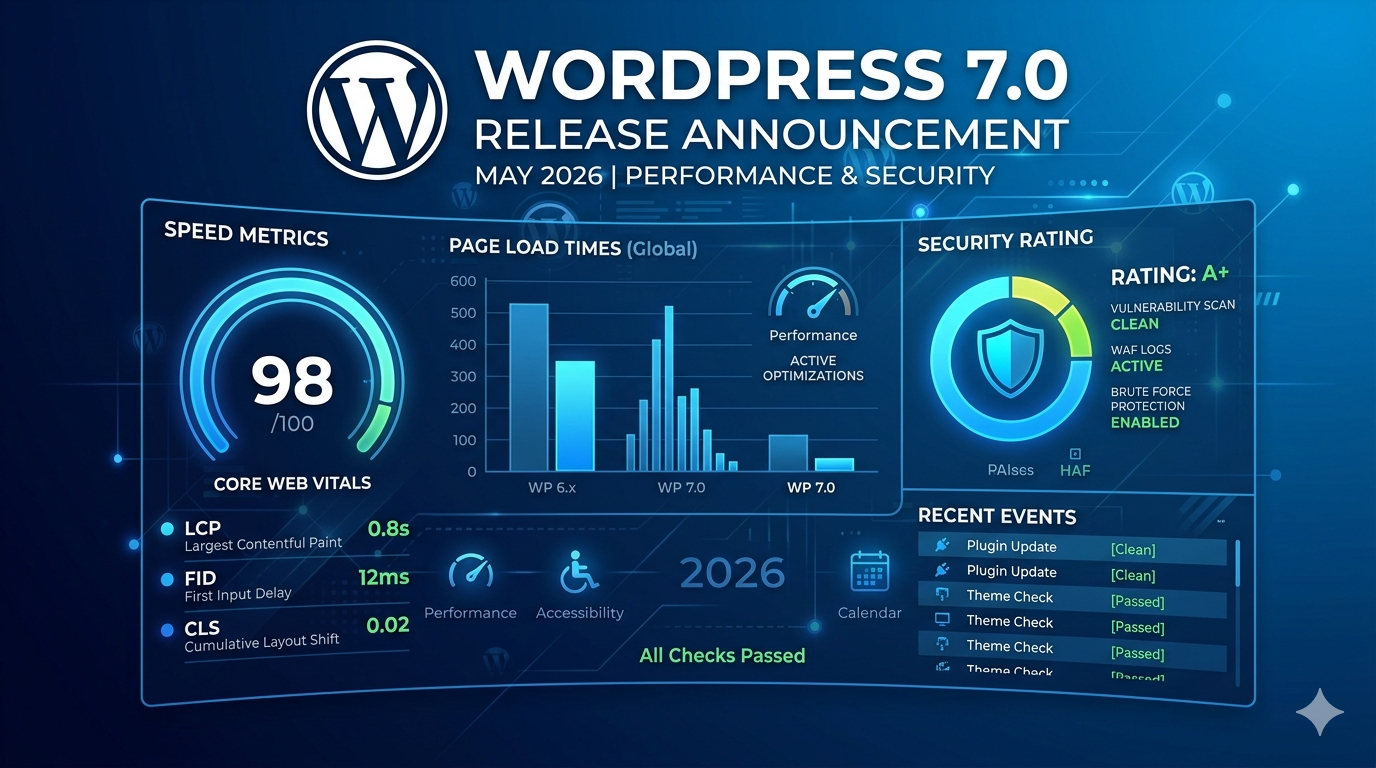
Performance remains a top priority for the WordPress core team. WordPress 7.0 continues the performance optimization work started in 6.9, with additional improvements to page load times, database query efficiency, and rendering performance. These enhancements are particularly important for shared hosting customers, where server resources are limited and every optimization helps your site load faster for visitors.
The improvements include optimized template rendering, better caching mechanisms, and reduced overhead in the block editor. For hosting providers, this means your WordPress installations will be more efficient, using less CPU and memory per request.
Security Improvements
WordPress 7.0 includes several security hardening measures. The release continues to build on the bcrypt password hashing introduced in WordPress 6.8, providing stronger protection for user accounts. Additional security refinements throughout the core codebase help protect against common attack vectors.
For hosting customers, this means an extra layer of protection for all WordPress sites running on your hosting plan. Regular updates to WordPress core are one of the most important security practices any website owner should follow.
Block Editor Refinements
The Gutenberg block editor receives continued improvements in WordPress 7.0. While real-time collaboration was intentionally removed from the 7.0 release to ensure stability (it will be re-evaluated for a future release), the block editor itself has been refined for better performance and reliability.
Theme developers and plugin authors should note that WordPress 7.0 introduces changes that may affect block registration and rendering. If you maintain a WordPress theme or plugin, testing against the latest release candidate is strongly recommended.
What Changed From the Release Schedule
WordPress 7.0 has had a dynamic release process. The original schedule had the release going out in April, but the team pushed it to May to accommodate additional architectural improvements and thorough testing.
One significant change occurred on May 8, 2026, when the WordPress team announced that real-time collaboration would not ship in WordPress 7.0. This decision was made to ensure the stability and reliability of the release, with concerns around server load, memory efficiency, and edge cases identified during extensive testing.
While real-time collaboration was an exciting feature, the WordPress Foundation and core development team emphasized that shipping a stable and reliable WordPress 7.0 release for users takes priority. The feature remains important and will continue development for a future release cycle.
What This Means for Your Hosting Setup
As a hosting customer, here is what you should know about preparing for WordPress 7.0:
PHP Version Requirements
WordPress 7.0 will require a minimum PHP version. Most modern hosting environments already run PHP 8.0 or later, which is fully compatible. If you are still running PHP 7.4 or an older version on your hosting plan, now is the time to upgrade. PHP 8.0 and above provide significant performance and security benefits for WordPress installations.
At BuyHTTP, our shared hosting plans support PHP 8.0 through the latest stable release, and you can switch between versions directly from the cPanel interface with a single click.
Database Compatibility
WordPress 7.0 remains compatible with MySQL 5.7 and MariaDB 10.4 or later, which are standard on virtually all hosting platforms. No database migration or changes are required for the upgrade.
Plugin and Theme Compatibility
Most popular WordPress plugins and themes are compatible with WordPress 7.0 out of the box. However, as with any major WordPress release, there may be edge cases where certain plugins need updates. We recommend checking with your plugin developers to confirm compatibility before updating.
Backup Before You Update
Regardless of your hosting provider, always create a full backup before updating WordPress core. This is a best practice that protects your website content, database, and media files. With BuyHTTP hosting, automated daily backups are included with all hosting plans, making it easy to restore your site if needed.
How to Prepare for the WordPress 7.0 Update
Here is a practical checklist for hosting customers to prepare for the WordPress 7.0 release:
- Update your PHP version to 8.0 or later through your hosting control panel
- Create a full site backup including files and database before updating
- Check plugin compatibility by reviewing developer announcements for your key plugins
- Test on a staging site if your hosting plan includes staging environments
- Update WordPress core when the release goes live on May 20, 2026
- Monitor your site after updating to ensure everything works correctly
- Clear your caching — both server-side and any CDN caching — after the update
WordPress 7.0 Release Timeline
Here is the key timeline for the WordPress 7.0 release:
- February 19, 2026: Beta 1 released
- March 24, 2026: RC1 released
- March 26, 2026: RC2 released
- May 8, 2026: RC3 released (final testing phase)
- May 14, 2026: RC4 (final release candidate)
- May 19, 2026: Code freeze and dry run
- May 20, 2026: General release of WordPress 7.0
Final Thoughts
WordPress 7.0 represents another solid step forward for the world’s leading CMS. With continued performance improvements, security hardening, and refinements to the block editor, it is a release that all WordPress hosting customers should plan to install as soon as it becomes available.
The decision to delay real-time collaboration shows the WordPress team’s commitment to stability and quality over rushing features into production. For hosting customers, this means a more reliable and performant WordPress experience on day one.
At BuyHTTP, we monitor all major WordPress releases closely and ensure our hosting infrastructure is optimized for the latest versions. Our cPanel-managed hosting plans make it easy to keep your WordPress installations up to date with just a few clicks.
Stay tuned to our blog for more tips on WordPress hosting, performance optimization, and website management. And when WordPress 7.0 launches on May 20, make sure your hosting plan is ready to deliver the best possible experience for your visitors.
Sources and Further Reading
-
- WordPress 7.0 Release Candidate 3 Announcement — WordPress.org
- WordPress 7.0 Release Party Updated Schedule — Make WordPress Core
- WordPress 6.9 “Gene” Release Notes — WordPress.org
- Real-time Collaboration Removed from WordPress 7.0 — Make WordPress Core
- WordPress 6.9 Release Notes — WordPress Documentation
Categories